Showing posts with label Aswan. Show all posts

Sunday, July 29, 2018

UNFINISHED OBELISK

HISTORY 

Ancient Egyptians were talented sculptors that mastered the art of transforming stone blocks into magnificent statues and structures. The most prevalent of these structures is the obelisk - a slender monolithic styled stone consisting of four sides and pyramidal shaped top. The first historical record of an obelisk dates to around 2575 BC with these early models reaching a modest height of 10 feet. With time, Ancient Egyptians would eventually create obelisks measuring a staggering 100 feet tall and had it been completed, the Unfinished Obelisk would have been the tallest at approximately 120 feet in height.  

Obelisks were created from red granite using dolerite balls, dolerite being a volcanic rock. Once the obelisks were quarried, they were transported to temples throughout Egypt which was a process that would take several months. At the temples, the obelisks would be erected in front of the main pylons and covered in electrum, an alloy composed of gold and silver. 

Obelisk in front of Luxor Temple.
FAST FACTS

One of the oldest surviving obelisks belongs to Senusret I, pharaoh who ruled Egypt from 1971 to 1926 BC during the 12th dynasty. 

The Unfinished Obelisk would have measured an estimated 120 feet in height and weighed over 1,150 tons. 

Queen Hatshepsut, who ruled during the 18th dynasty, is the only Ancient Egyptian woman to have built obelisks. All others were built by men. 

Queen Hatshepsut's obelisk at Karnak.

Many Ancient Egyptian obelisks were taken from Egypt and relocated around the world - Rome, Italy; New York City, United States; London, England; St. Peter’s Square, Vatican City; Paris, France. 

The tallest Ancient Egyptian obelisk is the Lateran Obelisk which now stands in Rome, Italy. 

VISITING THE UNFINISHED OBELISK 

The Unfinished Obelisk is located in Aswan and a stop to this site seems to be included on most tour itineraries. A visit to the site does not last long, generally 30 to 60 minutes, since there is not much to see, just the obelisk. During my first visit to the the Unfinished Obelisk, tourists had the opportunity to watch a short documentary on the history of obelisks and how Ancient Egyptians constructed them; however, when I went in 2018, there was no film. My tour guide stated that it has been a long time since the documentary was last shown. 


NOTE This site is definitely not suited for those with mobility issues. The walkways are not paved, there are no railings, and some climbs and descents can be steep. Also, there are loose rocks throughout the quarry so it is important to watch your step. 

NOTE One of the stores at the site is a bookshop from the American University in Cairo. This store is wonderful in that everything is a fixed price, so no haggling, and the books and items sold are of great quality. Between my two visits, I have purchased about $200 in books that are not sold, or are difficult to find, outside of Egypt. I have also purchased some beautiful bookmarks and postcards and one tour mate on my recent trip bought a few handmade dolls. 


Sunday, July 15, 2018

ABU SIMBEL

HISTORY

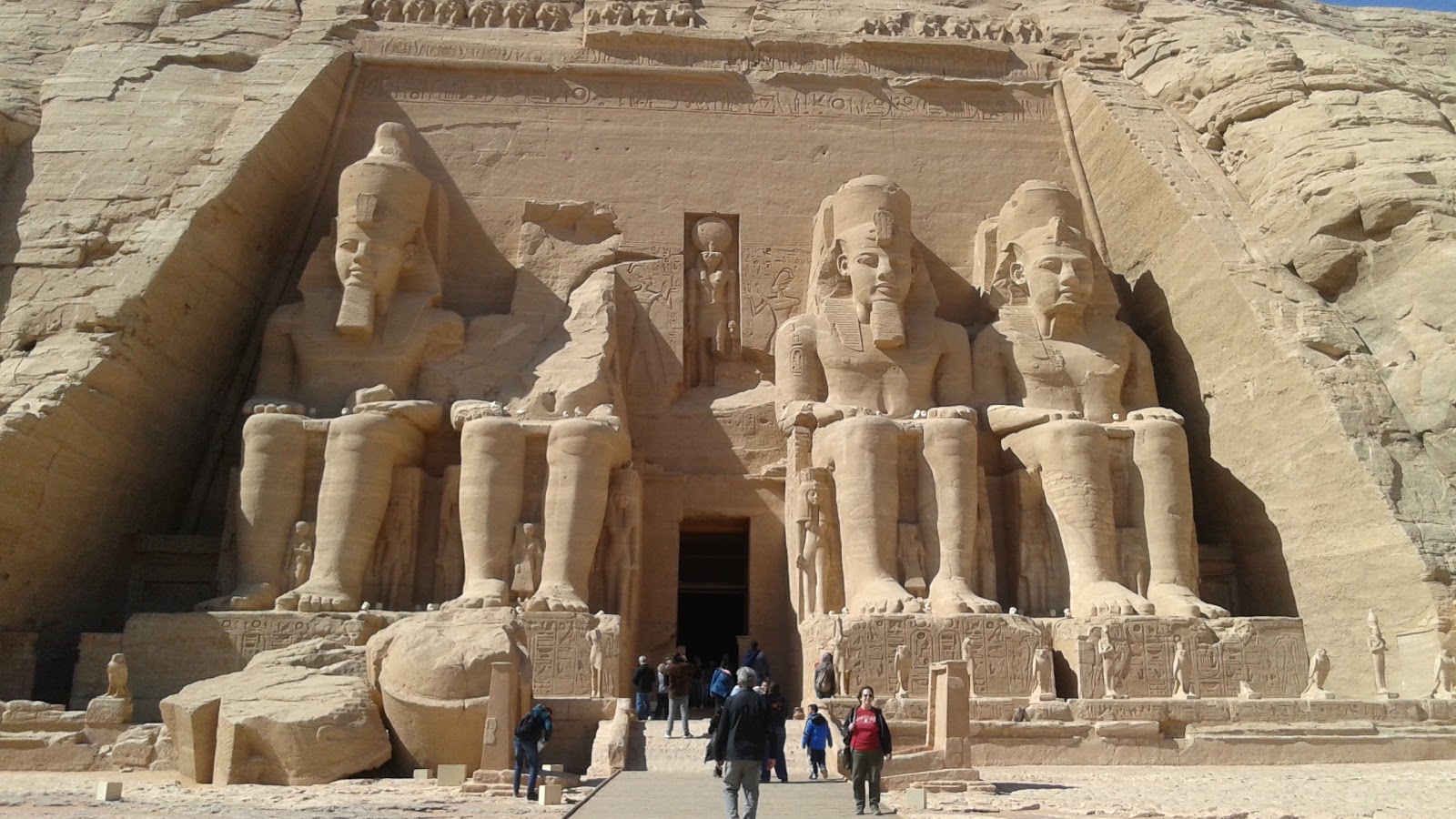
The site of Abu Simbel is home to two of the most magnificent temples from Ancient Egypt; the temples of King Ramesses II and his wife, Queen Nefertari. These temples are located south of modern day Aswan not far from Egypt’s border with Sudan. In ancient times, this site was around the 2nd cataract of the Nile River near Nubia. 

While scholars agree the temples were built during Ramesses’ reign in the 19th dynasty, there is dispute concerning the construction start date. Some scholars believe work on the temples started around 1264 BC to commemorate the pharaoh’s victory against the Hittites during the famous Battle of Kadesh. Others argue that construction began around 1244 BC which is about the time Ramesses and his sons held military campaigns against Nubia hence the chosen location for the temples. 

Today, the temples are located a distance away from their original location. When Egypt started the construction of the Aswan High Dam in the 1960s, which in turn created Lake Nasser, the temples were moved to higher ground. An international crew cut the cliffs and temples into blocks and moved the pieces about 688 ft back and 213 ft above their original position. 

FAST FACTS 

The main temple was built to honor the gods Amun, Ra-Harakty, and Ptah and to celebrate Ramesses’ military victory at the Battle of Kadesh. At the back of the temple, in the innermost sanctuary, there is a room with four statues - one each of the aforementioned gods and one of the pharaoh. Twice a year, generally February 22 and October 22, the morning sun lines up perfectly with the center hallway and lights up the statues. 

The entrance of the main temple is flanked by four seated figures of Ramesses each measuring 66 ft in height. At the base of each statue are carvings of small figures depicting the pharaoh’s children, his queen Nefertari, and his mother queen Ti.


In the interior of the main temple there are three consecutive halls extending 185 ft into the cliff with these halls flanked by statues of Ramesses. 

The second temple is dedicated to Ramesses’ favorite wife, Queen Nefertari, and the goddess Hathor. Its entrance is decorated with several statues of the pharaoh and the queen each having a height of 35 ft. 


The temples at Abu Simbel were discovered in 1813 by a Swiss researcher, Johann Ludwig Burckhardt, and were first explored in 1817 by Giovanni Battista Belzoni.

VISITING ABU SIMBEL

The temples at Abu Simbel are definitely worth the visit; however, getting to the site can be quite the journey. Tourists can either fly to Abu Simbel or make the trek via driving which takes 3 to 4 hours each way. The former is obviously more expensive but the latter can be a test of patiences. I have visited Abu Simbel twice and both trips were via EgyptAir departing from the Aswan International Airport. On my first trip, the optional tour to Abu Simbel was $264 while on this recent visit, it was $293. These tours included transportation to and from the Aswan International Airport, the flight, transportation to and from the site, and admission to the temples. The flight generally lasts around 45 minutes and tour groups are given approximately two hours to explore both temples. 


The downturn in tourism has greatly impacted the trips to Abu Simbel mainly in that there are only a handful of flights to the site. Before the Egyptian revolution of 2011, there were plenty of flights to the temples each day but now, from Aswan International Airport, there are only a few flights offered twice a week. The alternative to flying is driving to Abu Simbel with drives originating from Aswan and the round trip lasting several hours. 

When I went to Egypt in 2010, the flight departed on time and we had a full two hours on site which was great because Abu Simbel was packed with tourists and vendors. Unfortunately, things did not go according to plan on this recent trip since our flight was delayed by almost an hour. This delay cut our time at the site in half giving my tourmates and I just one hour to explore the two temples, which fortunately was sufficient since Abu Simbel was practically void of tourists. I honestly think there were less than 100 people at the site the morning my tour group visited the temples. 


While the majority of trips last just a few hours, there are several lodging options available at Abu Simbel for those who are interested in spending more time at the site. Overnight stays are especially popular on the two days of the year that the morning sun lines up with the central axis of the main temple lighting up the statues in the inner sanctuary.

NOTE If flying to Abu Simbel, request a window seat on the left side of the plane. This provides the opportunity to catch a glimpse of the temples from the sky. 


NOTE If you have mobility issues, I highly recommend you request a golf cart ride to the temples. It is a considerably long, steep walk to the temples from the parking lot and vice versa. 

NOTE When traveling with a tour group, tell the guide that you are interested in the Abu Simbel postcard set. You are not allowed to take pictures inside the temples but there are some really good quality postcards available from certain vendors.


Thursday, May 31, 2018

NILE CRUISES

Nile cruises can best be described as a slice of heaven on earth; sailing down the blue waters of the river while viewing the sun rise and set over ancient ruins and magnificent sand dunes. Both my journeys to Egypt have included a Nile cruise and there was nothing I enjoyed more than sitting on the top deck watching the sun set over the dunes and farm lands.


GENERAL INFORMATION

Most tourists visiting Egypt go through a travel company and the majority of these companies incorporate a Nile cruise into the itineraries. The standard cruises are those that sail between Luxor and Aswan lasting 3 to 7 days; however, there are some cruises that last well over a week with those ships sailing from Cairo towards Aswan. And not all cruises sail the Nile, there are some ships that travel around Lake Nasser in Southern Egypt providing the opportunity to view and visit Nubian sites. My two trips to Egypt have been with travel companies that contract with Spring Tours and said company mainly utilizes the M/S line of ships. Spring Tours does have two specialty ships - the only operating steamboat on the Nile and a Dahabiyya (sailboat) - but those are generally not used on the routine trips scheduled via tour companies. In 2010, I sailed on the M/S Norma, which appears to be out of service, and my recent Nile cruise was on board the M/S Medea. My trip on the M/S Norma lasted three days as we sailed from Aswan to Luxor while my journey on the M/S Medea was 7 days, completing a round trip that started and ended in Luxor.


Tour companies list on their website the ship(s) that they use for the Nile cruise portion of the trip. This gives people the opportunity to do research to ensure that the rooms, amenities, and dining options on board the ship are in line with their tastes.

ROOMS

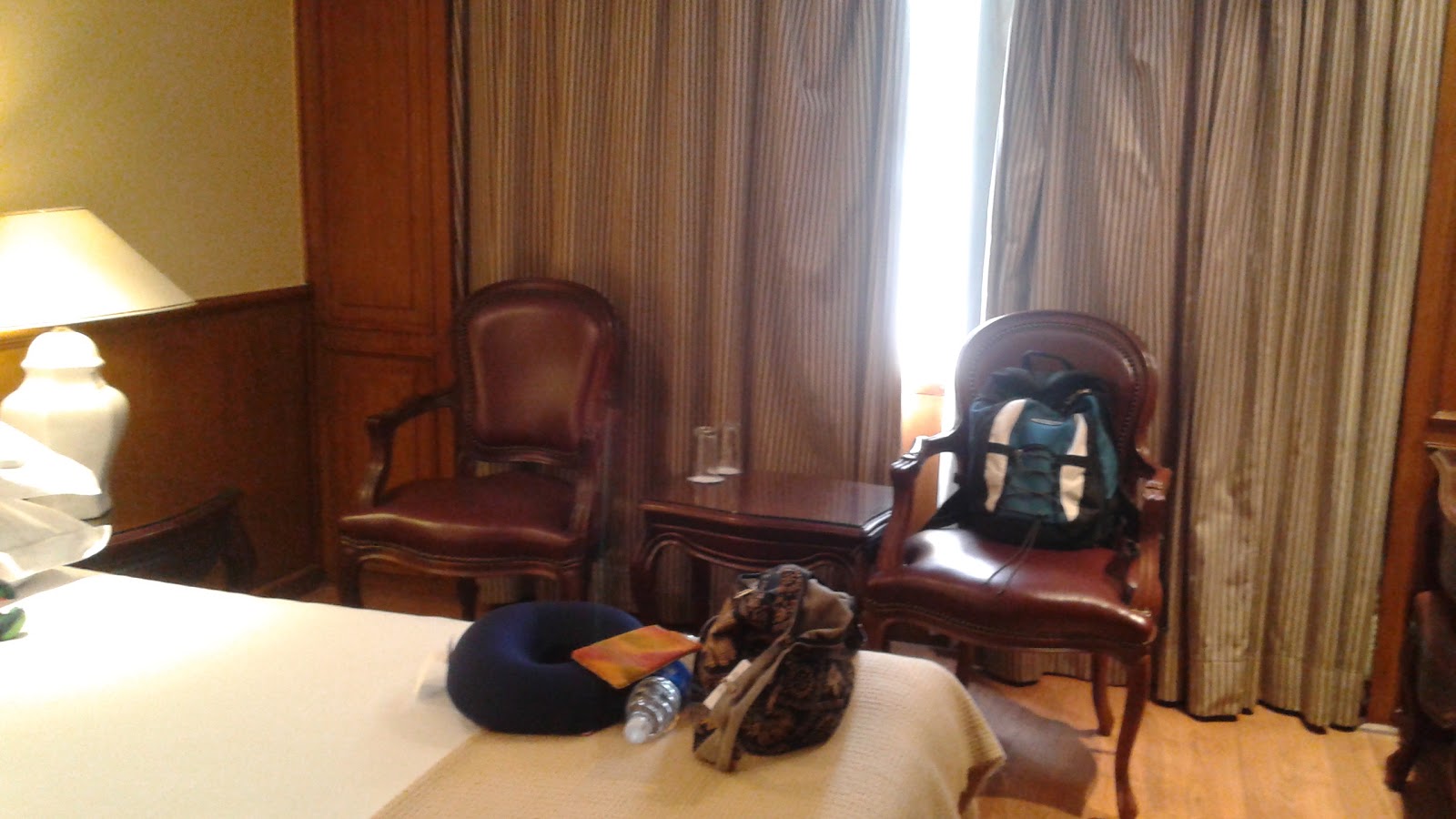
The rooms on the cruise ships can range from a simple cabin for one to a large suite built to accommodate a family. On my recent trip, I noticed that the M/S Medea had two of those suites with each having a door and staircase leading to the upper deck. My cabin was a decent size for one person and contained a queen sized bed, small table with two chairs, a writing desk with chair, luggage rack, TV, and a safe inside the closet. Interestingly, my married tour mates winded up in rooms with two twin sized beds. Since I was traveling solo and was not interested in a roommate, I did request ‘single accommodations’ which seemed to get me the big bed in the hotels and cruise. When doing research on Nile cruises, I notice that the more expensive tours use luxury ships which contain more suites, larger rooms and bathrooms, and balconies. Neither the M/S Norma nor M/S Medea had balconies but both had large windows that one could open.

My travel buddy Albert the Gator enjoying the comfy bed.


AMENITIES

In term of amenities, most ships have a lounge, gift stores, and a bar and pool on the top deck while the fancier boats also have gyms, spas, salons, etc. The M/S Medea had a small gym - one treadmill, one bike, some resistance bands - and a library, a few books one could borrow to read throughout the cruise. On the other hand, the M/S Norma just had the standard amenities. The lounge on the ships have a bar on one end and a dance floor in the middle for the evening shows and the Egyptian dance party, an event where guests dress in belly dancing outfits and galabayas, traditional robes worn by Egyptian men. This dance party is optional in terms of attendance and dressing-up. The two standard evening shows are the Whirling Dervish¸ a Turkish style performance that involves a man spinning while balancing and twirling colorful fabrics, and a belly dancing demonstration. I greatly enjoyed the two Whirling Dervish presentations I attended; however, I was not impressed with the belly dancing shows. In my most recent trip, the belly dancer went around the room selecting guests, of which I was one, to join her on the dance floor.


Lounge (M/S Medea)

Whirling Dervish (M/S Norma) (Photo by tour mate Jon)
DINING

The M/S Norma and M/S Medea served meals in an all-you-can-eat buffet style which provided the opportunity to sample a variety of cheeses, breads, salads, soups, sides, meats, and desserts. The 7 day cruises on the M/S Medea have one special evening where dinner is served via candlelight and there is a fixed menu. In my research of Nile cruises, I have noticed that many of the 'higher-end' ships do not offer buffets for lunch and dinner, just breakfast. Cruise meals are generally included in the trip cost except for beverages, sodas and alcoholic drinks, which are an extra charge. I never ordered beverages but my tour mates who did shared that the prices were very reasonable. I just enjoyed the unlimited free coffee and tea that was provided during meals and at tea time, of which I must have drank at least 30 cups during my 7 days on the M/S Medea.

Bread display on board the M/S Norma
Salads and cheeses, M/S Medea
Soups and entrees along with some of the amazing crew
Plenty of delicious desserts! 
NOTE While most ships provide Wi-Fi, the coverage area is very limited and not all tour companies pay for the service. On my last trip, when we were on board the M/S Medea, the cost of Wi-Fi was covered by Trafalgar, my tour company, but others on the ship had to pay a daily fee. Also, the Wi-Fi service was only available in the sitting areas on the 1st, 2nd, and 3rd floors of the ship.

NOTE Based on my two trips to Egypt and what I have come across in my research, most Nile cruise ships do not have elevators. One must be able climb stairs in order to access the dining area and gift shops (usually located in the bottom deck), cabins, and upper deck. Also, the walkway used to enter and exit the ship is rather narrow so that may pose a problem to some who have a mobility issue.

M/S MEDEA

Alicia, my tour mate, and I were very impressed with the M/S Medea; ship was impeccably clean, food was amazingly delicious, and service was top-notch. The boat has only 59 cabins (per the Spring Tours website) with a passenger capacity of approximately 118. The first three days on the M/S Medea were especially nice since there were only three very small tour groups on board the boat. On the fourth day, we had more folks join us and unfortunately, there were two rowdy boys that drove most crazy. Fortunately, Mohammed, the ship manager, did a wonderful job in handling the situation and by the second day, the boys were behaving a bit better. Another two outstanding staff members were Sayed, the dining manager, and Mahmoud, our waiter. These two gentlemen went out of their way to make the cruise feel like home and in the process, completely spoiled us. The rest of the cruise staff was also exceptional and extremely professional. Alicia and I greatly miss all of them and the 7 days on board the M/S Medea will always be a special memory we cherish and treasure.


Sunday, April 22, 2018

TRAVELING TO EGYPT: FLIGHTS AND AIRPORTS

My two trips to Egypt have entailed a considerable number of flights, 16 total, which equates to hours spent at airports. In this post, I will provide reviews on the airlines used during my 2018 trip and feedback on the various airports that I traversed on my journey.

NOTE Since I am really short, a height of 4' 11", I cannot provide feedback on the legroom, or lack thereof, found in airplanes.

AIRLINES

For my first trip to Egypt, I chose Delta Airlines since the flight was reasonably priced and the connection was in the US not Europe. The connection airport was important to me since the trip was my first major international journey and I was traveling solo. My trip originated at Miami International Airport (MIA), connected in JFK International Airport (JFK), and ended at Cairo International Airport (CAI). The decline in tourism after the 2012 Egyptian Revolution led Delta Airlines and other domestic carriers to stop offering direct flights to Egypt. This decline in tourism has also led to a decrease in overall flights to Egypt which means a limited choice of airlines, airports, and flight times. 

The approach to Cairo, airplane headrest TV monitor.
When doing research for my 2018 trip, I noticed that all flights leading to Cairo departing from MIA connected in Europe - mainly in Frankfurt, Germany and Rome, Italy. Domestic carriers offered flights to Europe but not Egypt and this is a hassle since an airline change during a connection means claiming your luggage and having to once again go through the check-in and security process. As such, I opted for Lufthansa since the company offered flights from Miami to Cairo with a decent layover at Frankfurt Airport (FRA), 5 hours, and reasonable fares. I prefer the longer layovers in the event of a delay which was the case during my 2010 trip when the flight to Cairo with Delta departed about 2 hours late. 

Trip comparison in regards to flights:

2010

6 flights
5 airports (MIA, JFK, CAI, ASW, ABS)
2 airlines (Delta and Egypt Air)
2 continents (North America and Africa)

Shortest flight - 40 minutes
Longest flight - 11 hours 20 minutes
2018

10 flights
7 airports (GNV, MIA, FRA, CAI, LUX, ASW, ABS)
3 airlines (American Eagle, Lufthansa, EgyptAir)
3 continents (North America, Europe, Africa)

Shortest flight - 40 minutes
Longest flight - 10 hours 5 minutes

NOTE  Airlines will be rated on three factors - customer service, timeliness of flights, and flight meals - with scores ranging from 1, very poor, to 10, excellent.

Lufthansa

Customer Service:  8

Timeliness of Flights:  6.5

Flight Meals:  9

I will start off with the food because I was amazed at the deliciousness of the meals!

The journey from Miami to Frankfurt started with your choice of beverage, I opted for coffee, and a bag of pretzels.

On the menu: Mixed salad with creamy Italian dressing, dinner roll, golden butter crackers (shaped like butterflies), a bar of Tillamook monterey-jack cheese, three cheese pasta with roasted red tomatoes, and a fudge brownie. The salad was fresh and crispy, bread was warm and melt in your mouth, pasta was creamy and cheesy, and the brownie was a little dry but still delicious. Only downside was that the pasta sauce was a tad heavy so I ate only half the tray but it was still good. This meal was a pleasant surprise, not what I expected to be served in economy during a flight.


Breakfast was just as delicious; an egg omelette topped with veggies and a side of potatoes. It was light and filling which is perfect for an early breakfast (it was served around 6:30 AM). For some reason I did not take a picture of the breakfast, maybe because I was partly asleep when I was eating it.

On the trip to Cairo from Frankfurt, I enjoyed one of the best meals I have ever eaten. The main dish was roasted potatoes in a light marinara sauce topped with a variety of roasted peppers and veggies. It was a simple dish but it was perfectly cooked and filled with flavor. The side salad was a mix of veggies and olives but I could barely eat it since the sauce was a bit too spicy for my taste. The dessert was some sort of yogurt with peaches; the yogurt wasn't too sweet and the peaches were great.


On the return trip to Frankfurt, I was once again served an omelette with veggies and potatoes for breakfast but this time, I was also given a croissant and side salad. The omelette was a bit dry but the potatoes and veggies were delicious as was the croissant. The omelette and croissant filled me up so I did not eat the salad. The picture came out dark because I didn't want to use flash, it was 4:00 AM and those around me were sleeping.


The first meal I was given on the Frankfurt to Miami route was the delicious potato dish. And fortunately, it was as great as it was the first time. The accompanying salad and dessert were also the same. 


I had high hopes for my final Lufthansa meal; however, it was too spicy! The dish was a mix of rice, chickpeas (garbanzos), and veggies in a curry sauce. I was able to eat the portions of rice that were not covered with the sauce and it was good but the rest was just too hot for me. The accompanying fruit salad was cool and fresh.


Another positive aspect of Lufthansa is the customer service. The representatives at MIA, FRA, and CAI were all helpful and the flight attendants were very attentive. When there were flight delays, representatives from Lufthansa did their best to keep us updated on the situation and provided revised departure times.

The one thing I did not like about Lufthansa is that 3 of my 4 flights departed late. My flight to Frankfurt from Miami was delayed a little over an hour, the flight to Cairo was late by about 40 minutes, and the flight to Miami was also delayed by approximately 40 minutes. Fortunately, they weren't major delays but when you have connections every minute counts.


My flights between Miami and Frankfurt were on board the Airbus 380 which is an airplane with 2 decks. I highly recommend that if your flight is on the 380 that you try to reserve a seat on the top deck. The economy section on the upper deck is just 35 seats, the seats are configured 2-3-2 instead of 3-4-3 like the bottom section, and the window seats have additional storage space next to them. The economy section on the upper deck was also rather peaceful since there was only a small group of passengers and the area is separated from business and premium economy by a set of curtains.


My travel buddy Albert the Gator
enjoying the bonus storage compartment. 
Lufthansa Airbus 380
EgyptAir

Customer Service:  8

Timeliness of Flights:  5.5

Flight Meals: N/A

For my recent trip to Egypt, Trafalgar used EgyptAir to travel between Cairo and Luxor instead of taking the overnight train which was the case on my 2010 tour with Contiki. And just like my previous trip, the optional tour to Abu Simbel included a flight from Aswan using EgyptAir.

One positive aspect of EgyptAir is the customer service. The gentlemen at the check-in counters were very helpful and tried to fulfill special requests such as my preference for window seats. Those working at the gate and the flight attendants were also attentive. Unfortunately, their punctuality is not as great with two flights experiencing unexplained delays. The most frustrating delay was for the flight to Abu Simbel; tours at Abu Simbel are approximately two hours long so the one hour delay cut our time at the site in half. This made me very upset especially since the optional excursion costs $293. We were never given an explanation for the delay nor were we informed on an estimated time of departure. The return flight to Cairo from Luxor was delayed by over an hour and again, there was no explanation.

The internal flights are rather short - about 60 minutes between Cairo and Luxor and about 40 minutes between Aswan and Abu Simbel - so EgyptAir does not provide meals but they do offer cookies and soda, water, or juice (apple, orange, and guava). Growing up in Miami and being Cuban, I very much love all things guava so I was excited when I was offered guava juice.


I want to support all things Egypt especially now that things have been rough for the country with the downturn in tourism. However, from my experience in January and what I have read on several travel sites, flight delays are not uncommon. EgyptAir does provide great customer service and their fleet seems to be well maintained and clean but on-time departures are important when it comes to pending connections and tours.

EgyptAir

American Eagle

Customer Service:  8

Timeliness of Flights:  9

Flight Meals: N/A

The area I live in does not have a major airport so I have to fly out of Gainesville Regional Airport (GNV) to connect to larger airports offering international flights. GNV only offers flights to Miami, Atlanta, and Charlotte via American Eagle and Delta and I frequently use the former to visit family in South Florida.

Similar to the internal flights from EgyptAir, meals are not provided since the journey is less than an hour. We are generally provided shortbread cookies or pretzels and water, soda, or juice. I am not a fan of the pretzels but I love the cookies. The best thing about American Eagle at GNV is the punctuality, I have only experienced a delay once and it was related to severe storms.

AIRPORTS 

Airports are never fun - overpriced food, bright florescent lights, mile-long security lines, uncomfortable chairs, and screaming children. In January 2018, I had the joy of spending about 18 hours in 7 airports over 16 days. Those are the crazy things I do for my love of Egypt!

The airports I traversed during my 2018 journey were the following: GNV, MIA, FRA, CAI, LUX, ASW, and ABU. Below, I will provide feedback on check-in, security, and food options.

Check-In

I completed check-in at GNV and MIA alone; however, in Egypt, we had either our tour guide or a Trafalgar representative assist us with the process. Check-in at GNV is great since it is a small regional airport where crowds tend to be light and lines nonexistent. I checked-in at about 5:00 AM for my flight and there were no lines. Unfortunately, that was not the case at MIA where I waited about 30 minutes to check-in for my flight to Cairo. The Lufthansa check-in area is in Terminal J which wasn't too crowded on a Sunday afternoon but the line for my flight was crazy long despite having several representatives at the counters. Once it was my turn to check-in, the process took less than 5 minutes so I am not sure why the line was moving at a snails pace.

For the internal flights, our tour guide Tarek assisted the group with check-in at CAI and LUX with neither airport having much of a line at the counter. When the group had to check-in at ASW for the flight to Abu Simbel, we were assigned another Trafalgar tour guide which led to a crazy mess since he was not very prepared and did not have all of our boarding passes. Fortunately, the EgyptAir representative was very helpful and assisted my tour mates and I with the check-in process.

The check-in process with Lufthansa at CAI turned out to be the same experience as the one at MIA. When my tour mates Alicia, Charles, and I arrived to the Lufthansa check-in area, there were no representatives at the counters and we had to wait for about 15 minutes before they showed up. Then the check-in process took about 20 minutes and this was with the assistance of our awesome Trafalgar representative. While the airline representatives are helpful and the flight meals are delicious; Lufthansa is not very efficient when it comes to on-time departures or the check-in process.

Security 

Security tends to be the biggest nightmare when traveling and nothing compares to the security at the airports in Egypt. At the 4 airports we traversed in Egypt, there were two security check points - one immediately upon entering the airport and then another at the gate - with the process taking a while since they were really thorough. Also, some lines were split by gender given the fact that the security officers basically patted everyone down after they passed the metal detector. Women are always assigned to a female officer so I really never had an issue with the extra security precautions.

My experience with security at GNV has generally been positive given that lines are very short and I generally do not have an issue with my carry-on luggage. Twice a TSA agent has taken a food item for additional inspection, first time it was a jar of key lime jam and the other was a mini key lime pie, but that process just took a few minutes. As for MIA, security tends to be pain because of the long, slow moving lines. Every time I go through security in Terminal D there is a considerable line and this past trip, on my return flight to GNV, the wait was almost an hour. Security in Terminal J was a better experience, shorter line and the agents were more efficient. I only had to wait about 10 minutes.

At FRA, my only issue with security was the lack of consistency with the process. One security check point required I just remove my shoes while another allowed me to keep my shoes on but take out my camera, Kindle, and chargers and yet another required I take off my shoes, remove my jacket, and basically empty out my carry-on bag. It was very confusing and frustrating especially during a flight connection. Other than that, the security lines at FRA were not that long and they moved rather quickly.

Food Options

Finding affordable food options at an airport is always a challenge especially in smaller airports like GNV which has only one restaurant and one store selling some food items. The restaurant does have good food but it is rather pricey given the quantity you receive. I purchased a small plain coffee and a yogurt and fruit parfait for $6.70; the coffee was decent and the yogurt was filling but too sweet for my taste.

Albert enjoying his coffee at 5:00 AM.
MIA has a considerable number of restaurants with Terminal J, together with neighboring Terminal H, having about 10 eateries. The dining establishments range from sit-down restaurants like Bongos Cuban Grill to grab-n-go stores such as Jamba Juice. I grabbed lunch at Earl of Sandwich where I paid $9.17 for an amazing veggie sandwich which was absolutely delicious, fresh, and filling.

Feta, cucumber, red peppers, red onions,
lettuce, tomato & Mediterranean dressing
At FRA, I did not see too many eateries around my gate, B 24, but there was a little deli selling grab-n-go items like sandwiches, muffins, salads, etc. The items were pricey given the combination of the deli being located inside an airport and the conversion rate of the US Dollar to the Euro. A bottle of soda and a small muffin cost me $7.65 and it was quite possibly one of the worst muffins I have ever eaten!! It was very dry and bland and I managed to eat only half.


I didn't spend much time at CAI, LUX, ASW, or ABU to explore the terminals but on the walk to the gates I did notice several eateries and stores selling food items. At ASW, during our one hour delay, I stopped by a grab-n-go store where I paid 10 Egyptian Pounds (approximately $0.57 as of April 22, 2018) for a pack of shortbread crackers and a packet of peanuts. The crackers were really good!